Network Communications · NearLink (SparkLink)
NearLink
Short-range wireless communication with low latency, high concurrency and low power.
More than three years of NearLink R&D across three lines: high-resolution audio, low-latency networking and high-concurrency access.
192kHz
24-bit high-resolution audio
In production use
4ms
1:10 network latency
In production use
120links
Concurrent links
Approx.; communication design capability
5,000
Devices on one network
Approx.; communication design capability
Technology lines
Three technology lines
The audio line builds expertise in data rate and latency; the concurrency line builds expertise in scheduling and stability. Both share one protocol stack and hardware platform.
High-resolution audio
- Sampling format
- 192 kHz / 24-bit
- HiFi air-interface latency
- 8 ms
- End-to-end latency
- < 20 ms
- Left/right channel offset
- < 1 ms
HiFi system figures from Product design v2.0
Low-latency networking
- 1:10 network
- 4 ms
- 1:1 data rate
- 3.2 Mbps
- 1:1 latency
- 3 ms
- Applications
- Wireless microphones, in-ear monitors, musical instruments
High-concurrency access
- Concurrent links
- ~120
- Devices per network
- ~5,000
- Coverage radius
- ~200 m
- Max data rate
- ~100 Kbps
Device power: long standby on a coin-cell battery
High-concurrency scheduling
Low power at large concurrency
Ultra-low power, high concurrency and a data rate of ~100 Kbps are usually hard to achieve together. NearLink high-concurrency scheduling is built on precise time-slot allocation: nodes wake on demand, do not contend for the channel and make no wasted retransmissions. Concurrency scales up while device power stays low.
In environments with strong electromagnetic interference, such as factories, frequency hopping and adaptive scheduling are used.
Limits of common approaches with large numbers of battery-powered devices
Devices: smart badges, electronic shelf labels, meeting table signs, wearables. Sites: factories, large retail stores, conference centers, hospitals, schools, care homes, hotels, car dealerships.
Super-factory IoT
NearLink SLE1.0 wireless transmission
A 40,000 m² factory site where 3,000 mobile devices operate across production areas, logistics aisles, equipment areas and storage areas, continuously uploading status data.
3,000
Mobile devices
At least 100 bytes every 2 s per device
10
5336 NearLink base stations
Coverage radius 50 m per station
100
Receiver units
10 receiver chips per base station
40,000m²
Continuous coverage
Overlapping zone deployment
Four-layer architecture
Device connection rules
- 01Preset receiver chip number
Each device is preset with one number, for example C, and can connect to chip C on any base station.
- 02Strongest signal
Among all chip C broadcasts, the device picks the strongest, for example 5C, connects and sends its data.
- 03Overload switching
When base station 5 finds 5C congested, it disconnects the device, which reconnects to 5D automatically, cycling through the numbers.
- 04Connection memory
When base station 5 is chosen again, the device uses its previous chip number first.
Device generates data → select station → connect → send → base station receives → upload to platform → release connection
Smart hospital ward wireless communications
Deployed per ward area, connecting smart devices in patient rooms with the nurse station. Five wireless access types: NearLink, Bluetooth, NearLink positioning, WIoTa and Wi-Fi 6. Northbound interfaces are MQTT, REST and WebSocket.
In-house: NearLink PoE gateway, WIoTa gateway, AI box, TR5310 communication module, bedside combo module, NearLink badge
| NearLink data delivery rate | ≥ 99.99%Data messages that require confirmation; transport-layer ACK and retransmission |
|---|---|
| NearLink data latency | P95 ≤ 100 msDevice to AI box northbound interface |
| Devices per gateway | 48 devices4 × TR5330, 12 each; planned at 80% load |
| Concurrent voice per gateway | 8 full-duplex channels16 kHz wideband, mouth-to-ear ≤ 200 ms |
| Badge positioning accuracy | 0.5 m (CEP80)Two- and three-bed wards, areas ≥ 0.5 m from the headwall |
| Room identification accuracy | ≥ 99%Including single-bed wards |
| WIoTa access | 1,000 devices / gatewayLow-frequency small-packet reporting |
| Availability | 24/7 operationUnplanned downtime ≤ 4 h per gateway per year |
Reliable transport layer frame format (device module ⇄ gateway)
Priority: 0 alarm / call > 1 voice > 2 control > 3 data > 4 log. Data messages are retransmitted 3 times on timeout; voice frames are not retransmitted and are handled by the jitter buffer and packet loss concealment. When the gateway loses its network connection, data is cached locally and resent after recovery, de-duplicated by sequence number.
NearLink HiFi audio system
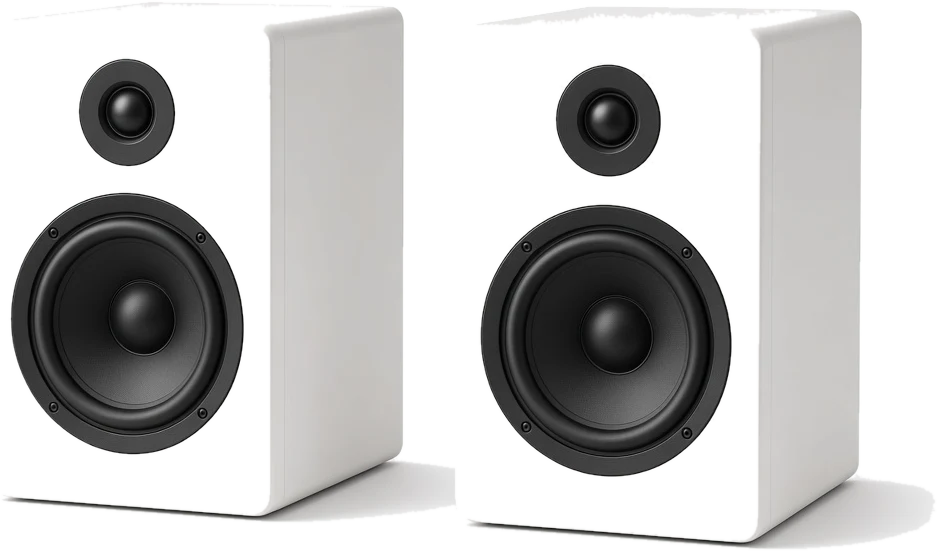
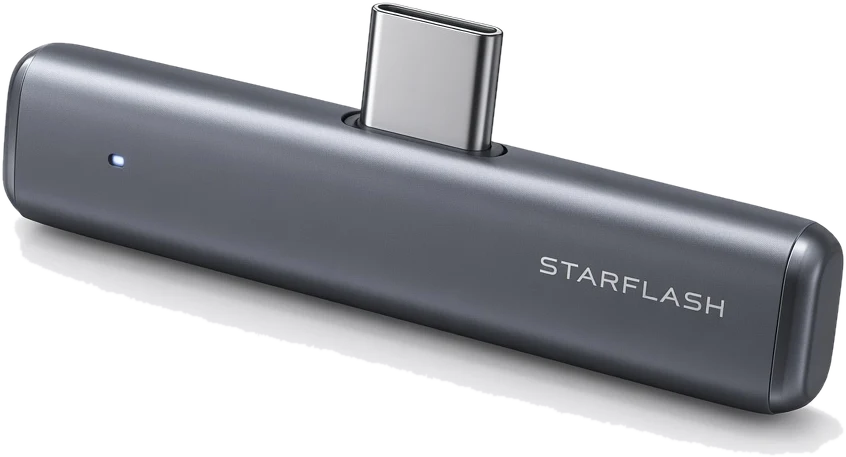
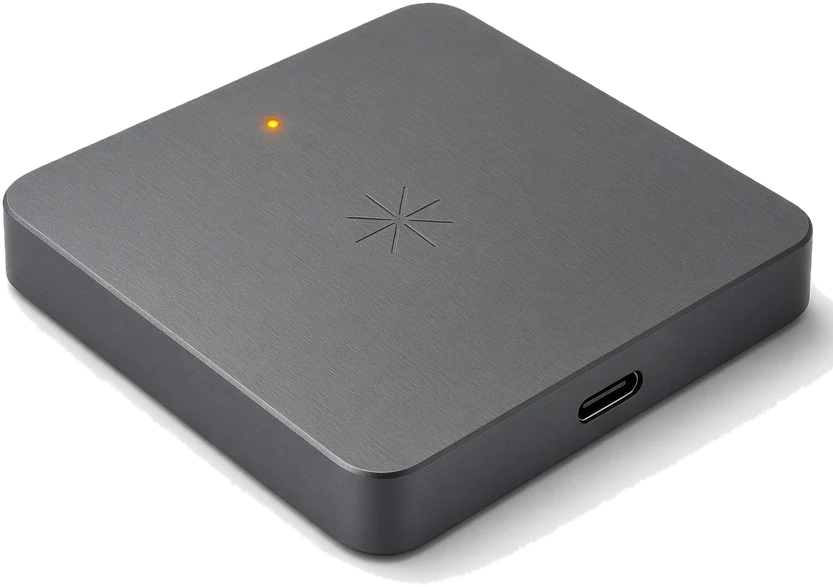
Two-channel 192 kHz / 24-bit audio carried over NearLink. Four products share one NearLink HiFi audio engine (transmitter TX, receiver RX). On the receiver side only the wireless module is replaced; the existing DAC, amplifier and enclosure are kept.
Active bookshelf speakers
Receiver, one for each of the left and right channels
HiFi dongle for phones
Transmitter, connects to the phone over USB
Master-quality player
Transmitter, 10 × 10 × 2 cm
End-to-end 20 ms latency budget
The left and right channels each use an independent NearLink link and are aligned by playback timestamp, offset < 1 ms (at 192 kHz, 1 ms is 192 samples).
Three-level packet loss recovery
- 1FEC recovery
4+1 or 6+1 short-window redundancy, ratio set by the measured packet loss rate
- 2Packet loss concealment (PLC)
Generates compensating audio from the waveform continuity of the preceding and following frames
- 3Retransmission fallback or frame skip
Used only in rare cases
Acceptance: with no packet loss, output is bit-identical to the PCM before encoding; with 0.1%–1% random loss and 1–3 consecutive lost frames, no audible pops or dropouts.
Other applications
Existing project directions
Brain–computer interface data transfer
Real-time backhaul of multi-channel data, with strict latency and data-integrity requirements.
Smart badges for a large factory
A factory of about 3,000 people: positioning, attendance and emergency calls covered by one network, with badge standby measured in months.
Smart meeting table signs
About 1,200 electronic table signs refreshed together before a meeting, all updated within seconds.
Modules
NearLink modules
XSCD-SLE800-CN NearLink audio communication module
| Package | Castellated SMD, 15.0 × 12.0 × 1.2 mm |
|---|---|
| Audio formats | 48 kHz / 24-bit stereo; 96 kHz / 24-bit stereo; 192 kHz / 24-bit mono; uncompressed transmission |
| Interfaces | I²S input / output; SPI, I²C, UART, GPIO |
| Applications | Wireless microphones, in-ear monitors, musical instruments, dongles |
TR5310 NearLink communication module
| Chip | TR5310, SLE 1.0 + BLE 5.4 dual mode, RISC-V 64 MHz |
|---|---|
| Form factor | Stamp hole / castellated, target ≤ 18 × 18 mm; PCB antenna and IPEX versions |
| Host interface | UART default 921,600 bps, up to 4 Mbit/s; SPI and I²S / PCM reserved |
| Security and updates | Device ID + key, optional SM4 at the application layer; OTA via gateway, dual-image rollback |
NearLink project enquiries
Please describe the number of devices, data volume and reporting interval, power supply and deployment environment.